

Pros & Cons
Pros
- Preferred Expert was one of the few paid extras that clearly improved the order itself.
- The 10-page draft felt structurally more controlled than a typical low-effort service paper.
- One Page Summary turned out to be more useful than it first sounds.
- Plagiarism Report makes practical sense for students who want extra reassurance.
- Quality Double-Check was inexpensive and at least somewhat defensible.
Cons
- Not every paid feature added equally visible value.
- Some argument sections still played it too safe intellectually.
- Grammar Check Report was hard to justify as a separate paid benefit.
- The value of the plagiarism feature depends on how much the buyer trusts the report itself.
- The fully upgraded version is easy to overbuild if you add everything at once.
That is exactly why I built this review around a different question:
If you pay for the upgraded version of StudentsPapers, does the order actually become better — or just more expensive?
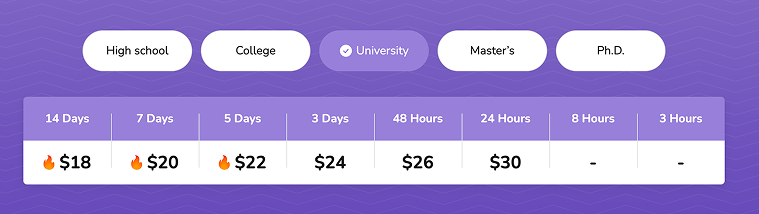
To test that properly, I avoided the usual fake-drama setup. No 3-hour emergency order. No impossible deadline. No easy excuse for weak quality. I placed a 10-page essay with a 14-day deadline and added every paid extra available.
That gave StudentsPapers enough room to either justify its upsells — or expose them.
What I Tested
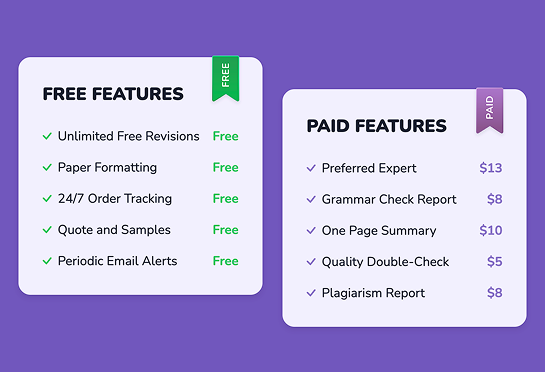
This review is built around the five paid features StudentsPapers pushes as meaningful upgrades:
- Preferred Expert — $13. Stronger writer quality and better academic control.
- Grammar Check Report — $8. Cleaner, safer final language.
- One Page Summary — $10. A more usable, easier-to-review final package.
- Quality Double-Check — $5. Fewer avoidable inconsistencies before delivery.
- Plagiarism Report — $8. Something trustworthy enough to reduce originality anxiety.
Total spent on extras: $44.
That number matters. Once the add-ons reach that level, they stop being harmless little upsells. They become part of the actual product.
The Order Setup
I deliberately kept the core order simple and realistic. The point was not to create a weird trap assignment. The point was to see whether StudentsPapers performs differently when a student pays for the "safer" version of the order.
- Paper type: academic essay.
- Length: 10 pages.
- Deadline: 14 days.
- Main goal: test the paid features, not deadline survival.
A 10-page paper is long enough to expose weak structure, filler, shallow argumentation, lazy transitions, and surface-level editing. A 14-day deadline is generous enough that StudentsPapers should not need to rely on urgency as an excuse.
That is what makes this setup fair. If something feels weak later, it is much harder to blame the clock.
What the Draft Actually Did Well
The first good sign was that the paper did not feel stitched together. It had a visible internal frame early on, which matters much more in a 10-page essay than in a short assignment. The introduction did not waste too much space circling the topic, and the body sections moved with enough continuity that the draft felt built rather than simply expanded to reach length.
The strongest improvements showed up here:
- The thesis arrived early enough and gave the paper a usable direction.
- The body sections had decent hierarchy rather than reading like isolated chunks.
- The overall rhythm stayed relatively stable across length.
- The draft did not immediately read as "cheap essay filler" writing.
That last point matters more than it sounds. A lot of service papers fail not because they are disastrous, but because they feel assembled by someone trying to imitate academic writing from the outside. This one did not immediately trigger that problem.
Short version: the paper looked more controlled than average, which is exactly what this add-on was supposed to buy.
Where the "Expert" Feeling Stopped Short
That said, paying for a stronger writer should ideally improve more than structure. It should also raise the intellectual sharpness of the paper. And this is where the result became more mixed.
The draft was well-managed, but not always especially insightful. It moved logically, but some sections still played it too safely. The writing often did what it needed to do, but did not always push far enough beyond competent explanation into stronger analytical force.
That gap showed up in a few places:
- Some argument steps were too clean to be memorable.
- Transitions helped movement more than persuasion.
- The tone stayed safely academic, but sometimes too safely.
That does not make the draft weak. But it does matter when you are paying specifically for a premium-level writer choice.
My verdict on Preferred Expert: this was one of the few add-ons that felt like it changed the actual order in a real way. Not dramatically. But enough to justify itself more than the rest of the extras had to.
Grammar Check Report: Clean Enough, but Hard to Prove
If Preferred Expert had to prove itself through the writing, Grammar Check Report had the opposite problem: it had to prove that it did anything beyond what a decent draft should already look like.
That makes this feature harder to judge fairly, but also easier to oversell.
What This Add-On Was Supposed to Do
At minimum, this feature should reduce the kinds of language-level distractions that quietly weaken a paper even when the bigger structure is fine.
- awkward sentence construction;
- small grammar slips;
- repetitive or clumsy phrasing;
- low-grade polish issues that make a paper feel under-edited.
That is a reasonable promise. The problem is that a decent writer should already be preventing at least part of that on their own.
Where the Add-On Felt Less Convincing
The problem is that once a paper is already reasonably clean, the remaining weaknesses are usually not classic grammar issues. They are quality-of-writing issues that sit just beyond grammar.
That is where this extra started looking much less impressive. The final text still had some softer language-level problems:
- phrasing that was correct but too safe;
- repetition in academic wording;
- sentences that were serviceable but not especially efficient.
None of those are catastrophic. But they are exactly the kinds of things that make a grammar-related add-on feel thinner than it sounds at checkout.
Grammar Check Report verdict:
- Basic readability — Good.
- Visible grammar safety — Mostly yes.
- Noticeable polish upgrade — Hard to prove.
- Worth paying extra? — Maybe, but not one of the strongest extras.
My verdict on Grammar Check Report: it helped the paper avoid looking sloppy, but it did not make the writing feel significantly smarter or more refined.
Quality Double-Check: A Small Add-On With a Bigger Expectation Than It Looks
At only $5, Quality Double-Check was one of the cheapest extras in the order. But in a way, that made it more interesting — not less. Low-cost add-ons like this are often where services quietly build the illusion of "extra care" without necessarily doing much.
So even though it cost less than the others, I treated it seriously.
What It Needed to Prove
If StudentsPapers is charging for an extra review layer, then the final package should show signs that somebody actually looked at the paper again before it left the system.
That should mean fewer avoidable misses in areas like:
- internal consistency;
- small formatting drift;
- repetition or awkward carryover;
- obvious quality-control sloppiness.
That is not a glamorous promise, but it is a practical one.
Did the Paper Feel "Double-Checked"?
Partly — but not strongly enough to make this one an automatic yes.
The final paper did not feel chaotic or obviously unfinished, which is a point in its favor. It held together well enough that there was no strong sense of visible last-minute carelessness. But the issue is that "not messy" is a low bar for a paid quality-control layer.
Where this extra seemed to help:
- general consistency across the document;
- no major collapse in structure halfway through;
- the package looked orderly enough to submit after review.
Where it still felt limited:
- some wording still felt more serviceable than polished;
- there were still areas where stronger cleanup could have pushed the paper further;
- the effect was visible only in a broad sense, not in a "wow, this was carefully sharpened" sense.
My verdict on Quality Double-Check: this one was more defensible than Grammar Check Report, mostly because the price is low and the benefit is at least plausible. But it still felt more like quiet support than a clearly measurable upgrade.
Plagiarism Report: One of the Most Sellable Extras — and One of the Easiest to Fake
Out of all the paid features in this order, Plagiarism Report was probably the one with the most emotional weight behind it. Students do not buy this because they enjoy reports. They buy it because they are trying to avoid one very specific nightmare: paying for a paper and then still feeling unsafe using it.
That is exactly why this add-on matters more than its $8 price suggests.
What This Extra Needed to Do
At minimum, a paid plagiarism-related feature should do more than just exist as an attachment. It should give the buyer something they can actually interpret and trust.
That means it should ideally answer at least some version of these questions:
- Does the paper look original enough to submit?
- Does the report feel specific rather than generic?
- Would a nervous student actually feel calmer after opening it?
That was the standard I used here.
What Made This Add-On More Useful Than Grammar Check Report
Unlike the grammar feature, Plagiarism Report at least has a clear practical role in the buying logic. A student may not know how to judge sentence rhythm or structural strength very well, but they absolutely understand what originality anxiety feels like.
That means this extra has built-in value if it is handled credibly.
And in fairness, this is one of the few add-ons where the usefulness does not depend entirely on whether the paper became "better." Sometimes the value is simply in reducing uncertainty in a way the buyer can act on.
That is what makes it more defensible than some of the softer extras:
- it addresses a real student fear;
- it has a direct submission-related purpose;
- and it can matter even when the writing itself is already acceptable.
Where It Still Has a Credibility Problem
The catch is obvious: a plagiarism report is only as useful as the student's ability to believe it. That is the hidden weakness of this entire category. Services know this feature sounds reassuring, but the actual value depends on whether the report feels like a meaningful check or just a symbolic file included to calm the buyer down.
My verdict on Plagiarism Report: one of the most understandable extras to buy, and one of the few that makes sense even if the paper itself is already decent. But it only holds value if the student actually trusts what they are being shown.
One Page Summary: More Useful Than It Sounds
A lot of students do not just need a file. They need a faster way to mentally reconnect with what they are submitting. And that becomes even more important when the assignment is long enough that the student may not want to re-read every page carefully right before submission, discussion, or revision.
That is where this feature has a legitimate use case. If done well, a one-page summary can help with:
- quick review before submission;
- understanding the structure of the argument;
- remembering the main points before class discussion;
- feeling less disconnected from the final paper.
That is actually more useful than some of the "clean-up" extras — because this one has the potential to help the student own the paper better, not just receive it.
Why It's Also Very Easy to Get Wrong
The problem is that this add-on only works if the summary is genuinely useful. A lazy summary would immediately collapse into one of the weakest features in the order.
This kind of extra becomes pointless if it is:
- too generic;
- too obvious;
- just a compressed repeat of the introduction;
- or too shallow to help the buyer re-enter the paper quickly.
My verdict on One Page Summary: potentially one of the smartest extras in the whole order — but only if it helps the student actually understand and reuse the paper, not just glance at it once.
What the Extras Looked Like as a Group
By this point, the pattern across the paid features was much easier to see.
StudentsPapers was not just selling "improvements." It was selling different kinds of reassurance:
- Preferred Expert = reassurance about writer quality.
- Grammar Check Report = reassurance about visible polish.
- Quality Double-Check = reassurance about internal review.
- Plagiarism Report = reassurance about originality risk.
- One Page Summary = reassurance about understanding the final paper.
That is actually a much more useful way to judge them than simply asking whether each one "worked." Because not all extras are trying to solve the same problem.
Some are trying to make the paper better. Some are trying to make the package feel safer. Some are trying to make the student feel more in control of what they are buying.
And once you see that clearly, the real evaluation becomes much simpler:
Which extras changed the order itself — and which ones mostly changed the buyer's confidence around the order?
Which StudentsPapers Extras Were Actually Worth Paying For?
After testing the fully upgraded order from a practical student angle, the pattern became much clearer: not all paid features were trying to do the same job, and not all of them earned their place equally well.
Some extras affected the paper itself. Others mostly affected how safe, clean, or manageable the order felt once it was delivered. That distinction matters, because a feature can still be useful without being essential — and it can also sound impressive without really changing much.
- Preferred Expert — Yes. The strongest extra in the order; improved control more than brilliance, but still the clearest upgrade.
- Grammar Check Report — Maybe. Useful in theory, but too hard to separate from what a decent writer should already deliver.
- Quality Double-Check — Maybe. Quietly useful and reasonably priced, but not strong enough to feel like a major difference-maker.
- Plagiarism Report — Yes / Maybe. One of the most understandable extras to buy, especially for anxious students, but only if you trust the report itself.
- One Page Summary — Surprisingly yes. More practical than it first sounds, especially for students who need to review or explain the paper quickly.
The short version: if I had to reduce the entire test to one sentence, it would be this — StudentsPapers' paid extras are not equally useful, but a few of them do make the order feel meaningfully stronger rather than just more decorated.
FAQ
Is StudentsPapers better if you pay for the extras?
Yes, but not across the board. Some paid features made the order feel more stable and usable, especially Preferred Expert and, somewhat unexpectedly, One Page Summary. Others were harder to defend because their effect was either subtle or too easy to confuse with what a decent base order should already include.
Which StudentsPapers add-on was the most worth it?
Preferred Expert was the clearest winner in this test. It did not make the paper brilliant, but it did make it feel more controlled, better structured, and less likely to need major cleanup later. Out of all the paid features, this was the one that most clearly affected the draft itself.
Is the Grammar Check Report worth paying for on StudentsPapers?
Only if you really want an extra layer of language reassurance. The final draft was readable and mostly clean, but it was hard to prove that the grammar add-on created a major difference on its own. It helped the paper avoid looking sloppy, but it did not dramatically elevate the writing style.
Does the One Page Summary on StudentsPapers actually help?
More than it sounds like it would. This was one of the more surprisingly practical extras because it has a real use case: helping a student quickly review, understand, or mentally reconnect with the paper before submission, revision, or discussion. It is not essential, but it was more useful than some of the more "serious-sounding" upgrades.
Would I order the fully upgraded StudentsPapers package again?
Not in exactly the same way. I would be more selective. I would keep the extras that either improved the paper itself or made the final order easier to use confidently later. But I would not automatically pay for every available feature again, because some of them added much more value than others.